About
challenges
Approach
solution
impact/Learning

Study time!!
78%
of students still pay a consultancy for document help
59%
of hiring managers struggle to see soft skills in a resume (Source: LinkedIn)
59%
of job success comes down to soft skills, not technical ones says Harvard
64%
feel the soft-skill tools they’ve tried lack personalization
73%
juggle separate tools just for their resume, SOP, and LOR
85%
feel real anxiety in interviews from a lack of practice
Solution: Skitre AI
That’s the gap Skitre AI closes — and the one I spent five months designing for.
Skitre AI serves two audiences, for students hunting a first job, and, for professionals trying to level up inside one they already have. Both get stuck with the same broken toolkit — a resume builder here, a mock-interview app there, an AI writing tool that forgets everything between tabs.
My challenges and role
My brief was the whole ecosystem, not a feature: documents, interview practice, a progress dashboard, a gamification layer, and the design system underneath. Here’s the research that made the brief feel urgent instead of theoretical:
I led product design end to end: the AI interview coach, the document suite, the gamification layer that’s supposed to make practice feel less like homework, and the system holding all of it together.
The problem, blunty
Data tells the story
78%
of students still pay a consultancy for document help
59%
of hiring managers struggle to see soft skills in a resume (Source: LinkedIn)
59%
of job success comes down to soft skills, not technical ones says Harvard
64%
feel the soft-skill tools they’ve tried lack personalization
73%
juggle separate tools just for their resume, SOP, and LOR
85%
feel real anxiety in interviews from a lack of practice
Competitive analysis, audit report


78%
of students still pay a consultancy for document help
59%
of hiring managers struggle to see soft skills in a resume (Source: LinkedIn)
59%
of job success comes down to soft skills, not technical ones says Harvard


Know thy enemy
Five direct competitors, used the way a real user would — signed up, sat through onboarding, ran a mock interview, tried to build a document. Not a features list. A hunt for exactly where each one breaks.
THE ALL-ROUNDER — Tries to cover interviews and documents at once - Lets you prep for a specific target role - Has an AI coach - Keeps a live log of practice sessions - Only text-based feedback - No SOP, LOR, or cover letter builder - Resume builder feels cluttered and tedious
THE CONVERSATIONAL COACH — An AI that role-plays the interview with you - Customizable interview scenario and persona - Feedback names both strengths and weaknesses - Asks real follow-up questions - No soft skills actually measured - No career or professional document tools - Navigation isn’t intuitive
THE CLEAN TRAINER — Simple interview practice, nothing else - Easy to use, intuitive flow - Clean, modern UI - No dedicated soft-skills practice - No professional documents at all - Feedback stays purely technical - No personalized or adaptive learning paths
THE VR PLATFORM — Practices soft skills through simulated scenarios - Wide range of soft skills, practiced separately - Genuinely novel use of virtual reality - No professional documents - Only covers soft skills, nothing else - Built for corporate use only
THE THEMED APP — Leans on a game-like skin for engagement - Theme-based UI makes it feel more like a game - No professional documents - Visually outdated
Same disease, different patient
Only 2 of 5 competitors bothered with gamification, and both pulled the same single lever — a badge for finishing a module. That’s Accomplishment, one of eight drives in the Octalysis framework. Nobody touched Social Influence, Scarcity, Unpredictability, or Empowerment. My own audit had already diagnosed the same failure at home: “gamification elements don’t excite the users, as most of the part is text and emoji.”
So the brief for Skitre’s gamification layer became simple: pull more than one lever at once. Streaks for Accomplishment (and a little fear of breaking the chain — Loss Aversion). A leaderboard for Social Influence. Named badges tied to real milestones instead of vague tiers, for Meaning. Content that only unlocks once you’ve earned it, for Unpredictability.
Two people who want opposite things
A panicking final-year student and a bored mid-career professional are not the same user wearing different clothes. I mapped both before drawing a single screen.
Students & freshers
SAY - “I get nervous in interviews — wish I could practice realistically.” - “Why can’t one app guide me properly, step-by-step?”
THINK - “I mess up in real interviews because I never got real practice.” - “How do I keep up with all these tools?”
DOES - Spends hours on ChatGPT rewriting SOPs and LORs. - Visits multiple platforms for resume, SOP, interview prep.
FEEL - Overwhelmed by the sheer number of tools. - Disappointed by cookie-cutter suggestions.
PAIN POINTS - Separate platforms for resume, interview practice, and soft skills - No real mock-interview experience with feedback - Consultancies are expensive and impersonal
GOALS - One platform for every job-readiness need - Real, human-like mock interviews - Track progress like a fitness app
Young corporate professionals
SAY - “I’d pay for feedback that’s actually useful.” - “I don’t have time to dig through five platforms for growth.”
THINK - “Why are these L&D sessions so outdated?” - “AI should help me communicate better, not give motivational quotes.”
DOES - Attends L&D sessions passively. - Rarely updates his LinkedIn profile, let alone his resume.
FEEL - Burnt out on shallow L&D with no personalized feedback. - Stuck in mid-career stagnation.
PAIN POINTS - Traditional LMS is outdated and boring - No personalized feedback on leadership growth - Interview prep focuses only on freshers
GOALS - Become promotion-ready with tangible evidence - Practise interviews with real performance metrics - Measure skills like a product roadmap — see the deltas
Same root need — proof of progress. Wildly different patience for anything that feels like a game. Skitre Labs got to be playful. Skitre360 had to earn every mechanic before it was allowed to feel fun.
Eight bets, backed by evidence
Every feature below answers something specific from the research — not a hunch, not a trend I liked.
Ace AI-powered interviews Pick a role, paste the actual job description, choose an interviewer persona and format — audio, video, or a fully mocked call. Direct answer to the 85% anxiety stat and the “text-only feedback” gap.
Measure your skills The Skitre Rise Dashboard rolls Dojo scores, course scores, and streak points into one Skitre Index, plus a named skill breakdown (Language Skills, Empathy, Problem Solving, Interpersonal Skills, Interviewing Skills, Decision Making). Answers “insufficient analytics” and the professional persona’s own words: “I’d pay for feedback that’s actually useful.”
Keep track, earn stats XP, Tokens, skill-specific Dojo Belts, and Easy/Moderate/Hard/Ninja difficulty tiers, with streaks tracked front and centre. This is the Octalysis fix — Accomplishment and Social Influence working together instead of Accomplishment alone.
30+ careers Every practice session and template tunes to a specific role, junior to director. Answers the 64% “no personalization” stat and “interview prep only focuses on freshers.”
Mobile friendly Full interview practice on a phone, not a cramped desktop port. “Mobile problems” showed up in more than one competitor teardown — not a small fix to skip.
Auto-build with AI Pull in a LinkedIn profile, generate a first draft, keep resume, SOP, LOR, and cover letter in one place. Direct answer to the 73% stat and “no SOP/LOR/cover-letter builder.”
Earn badges Belts and named badges (Wind Disciple, Flow Samurai, Achiever, Specialist) tied to real, visible milestones rather than “Level 2.” Meaning and Accomplishment, activated together on purpose — a direct answer to “gamification elements don’t excite users, as most of it is text and emoji.”
Unlock fun New practice modes and content unlock as a streak builds, instead of everything being visible on day one. Direct fix for “engagement dips over time.”
The naming wasn’t a branding flourish. Wind Disciple and Flow Samurai are tied to a real bar — Flow Samurai unlocks at fifteen video interviews, not “keep using the app.” A generic tier only ever activates Accomplishment. A named badge with a real story activates Accomplishment and Meaning at once — exactly what the teardown showed everyone else missing.
The system holding it together
Eight features are easy to say and hard to keep consistent across two audiences and thirty-plus careers. So before I drew a single final screen, I built the system everything else would have to live inside.
Figtree — Display & headings — bold, a little rounded, friendly without tipping into juvenile. It had to carry a badge-unlock moment and a corporate dashboard equally well.
Roboto — Body copy — neutral, highly legible, gets out of the way of the content.
COLOUR Primary (green) · Neutral (white) · Neutral (near-black) · 8 accents (cyan, blue, indigo, purple, pink, red/salmon, orange, yellow)
COMPONENTS Toasts (4 states) · Tabs, w/ and w/o icon · Icon set · Grouped & single-select dropdowns · Toggles · Badges · Dialogs & alerts · Tooltips · Buttons · Chips
The colour split was the deliberate part. Green plus black-and-white neutrals carry almost everything serious — buttons, progress, primary actions, anything Skitre360 touches most. The six pastel accents are reserved almost entirely for the gamification layer: badges, streak calendars, tags. That containment is how the same product stays credible for a hiring manager and genuinely fun for a first-year student, instead of feeling like two apps stapled together.
The component list looks boring to read, and that’s exactly the point — it’s the layer that stops “inconsistent design language” from creeping back in once thirty career variants and two audiences are all pulling from the same file.
How the work actually unfolded
Here’s the real order of operations, pulled straight from my project timeline — not the tidy version I’d present in a meeting, the actual one. Dec 2024 — Foundations The Criticism Document, competitor and gamification research, ideation and brainstorming, a moodboard, then the first real system decisions — base components, colour, a new sitemap and userflow. Criticism report · Competitor + gamification research · Ideation & brainstorming · Moodboard · Base components & colour style · Sitemap & userflow · UI-1 · Login & sign-up Jan – Feb 2025 — Core build The main functional surfaces: getting documents, interviews, and account management to a working, navigable state. UI-2 · Document centre · UI-3 · Audio interview prep · Mock interview · Video interview · Dashboard & profile · Checkout, cart, wishlist, orders Feb – Mar 2025 — Gamification, and the hard merge Building the streaks-and-badges layer, writing the new-user tutorial, and the moment I’d call the real turning point of the project — merging Skitre Labs and Skitre360 into one shared system instead of two parallel products. Gamification system · Onboarding tutorial · Skitre Labs / Skitre360 junction · Colour & design-system variants · 2nd iteration — flow, UI, new components Mar – Apr 2025 — Polish The unglamorous but necessary pass — error states, edge cases, and refining the resume builder now that the system underneath it had actually settled. Report · Error pages · Resume builder refinement The line on that timeline I’m proudest of is easy to miss: Skitre Labs / Skitre360 — junction for all. That’s the point I stopped designing two products that happened to share a login screen and started designing one system with two skins. It’s also exactly why a “2nd iteration” entry sits right after it — once that merge was real, a good chunk of my early screens didn’t hold up, and I went back through the design system itself rather than patch individual screens one at a time.
The parts that were actually hardwork actually unfolded
Not a highlight reel. Here’s what genuinely slowed me down. Two audiences, one system Skitre Labs is playful and forgiving. Skitre360 has to feel credible to someone evaluating it for their whole team. I had three ways to handle that. OPTION A — Two separate products Independent IA and UI, one per audience. − Doubles the work. Guarantees the two drift apart within a year. OPTION B — One identical product Same screens, same tone, for both audiences. − Always wrong for at least one side. Playful reads as unserious to a manager; corporate reads as boring to a student. OPTION C — CHOSEN — One skeleton, two skins Shared IA, components, and interaction patterns. Tone and colour weight diverge only at the surface. ✓ Consistent, half the maintenance, still feels native to each audience. That’s the “junction” moment on the timeline — the single decision that made everything built after it sustainable. Fun, without trivializing real anxiety 85% of the people in my research said interviews make them anxious. Slap confetti and a mascot on that and it reads as flippant, not helpful. Octalysis gave me a sharper filter than my own taste: activate drives tied to actual competence — Accomplishment, Meaning — instead of decoration. The interview and document tools stay calm and serious. “Fun” lives in a dedicated stats-and-badges layer, visited after the real work is done, never layered on top of it. Scaling to 30+ careers without falling apart Every career track needs tuned content. None of them need their own components. That distinction is the entire job of a design system — it’s why “variants” and “2nd iteration” both sit on my timeline. Thirty-plus career surfaces will find every inconsistency you left behind, if you let them.
The parts that were actually hardwork actually unfolded
Not a highlight reel. Here’s what genuinely slowed me down. Two audiences, one system Skitre Labs is playful and forgiving. Skitre360 has to feel credible to someone evaluating it for their whole team. I had three ways to handle that. OPTION A — Two separate products Independent IA and UI, one per audience. − Doubles the work. Guarantees the two drift apart within a year. OPTION B — One identical product Same screens, same tone, for both audiences. − Always wrong for at least one side. Playful reads as unserious to a manager; corporate reads as boring to a student. OPTION C — CHOSEN — One skeleton, two skins Shared IA, components, and interaction patterns. Tone and colour weight diverge only at the surface. ✓ Consistent, half the maintenance, still feels native to each audience. That’s the “junction” moment on the timeline — the single decision that made everything built after it sustainable. Fun, without trivializing real anxiety 85% of the people in my research said interviews make them anxious. Slap confetti and a mascot on that and it reads as flippant, not helpful. Octalysis gave me a sharper filter than my own taste: activate drives tied to actual competence — Accomplishment, Meaning — instead of decoration. The interview and document tools stay calm and serious. “Fun” lives in a dedicated stats-and-badges layer, visited after the real work is done, never layered on top of it. Scaling to 30+ careers without falling apart Every career track needs tuned content. None of them need their own components. That distinction is the entire job of a design system — it’s why “variants” and “2nd iteration” both sit on my timeline. Thirty-plus career surfaces will find every inconsistency you left behind, if you let them.
The Impact
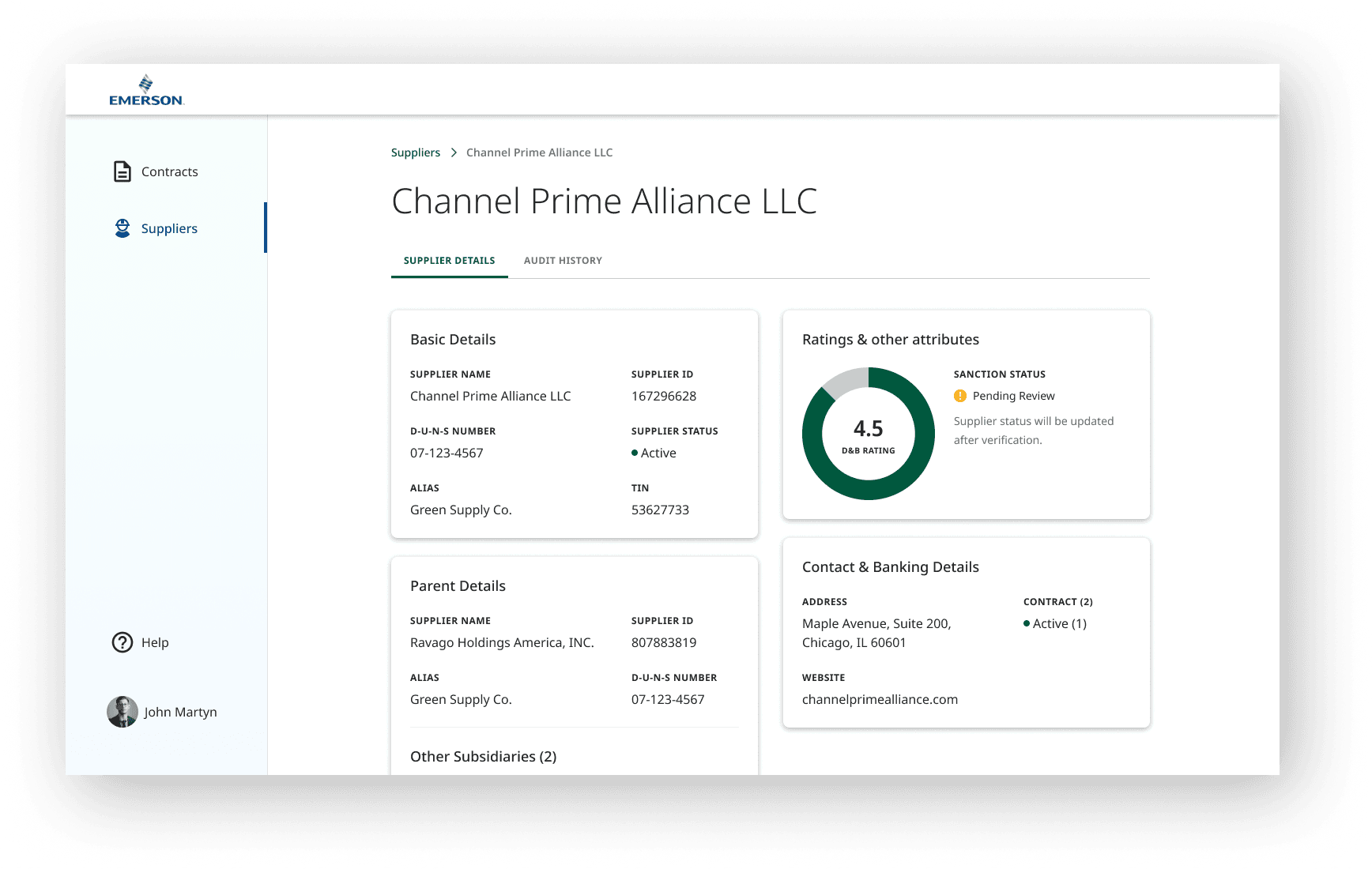
I designed an Agentic tool for supplier onboarding and contract generation for a global industrial automation leader. I designed an Agentic tool for supplier onboarding and contract generation for a global industrial automation leader.
Learnings and reflections
I designed an Agentic tool for supplier onboarding and contract generation for a global industrial automation leader. I designed an Agentic tool for supplier onboarding and contract generation for a global industrial automation leader.
More Projects

Opportunity bidding website for events like Superbowl, Olympics
Opportunity bidding website for events like Superbowl, Olympics
Opportunity bidding website for events like Superbowl, Olympics
Opportunity bidding website for events like Superbowl, Olympics